Hotels - Santa Isabel

About  Santa Isabel

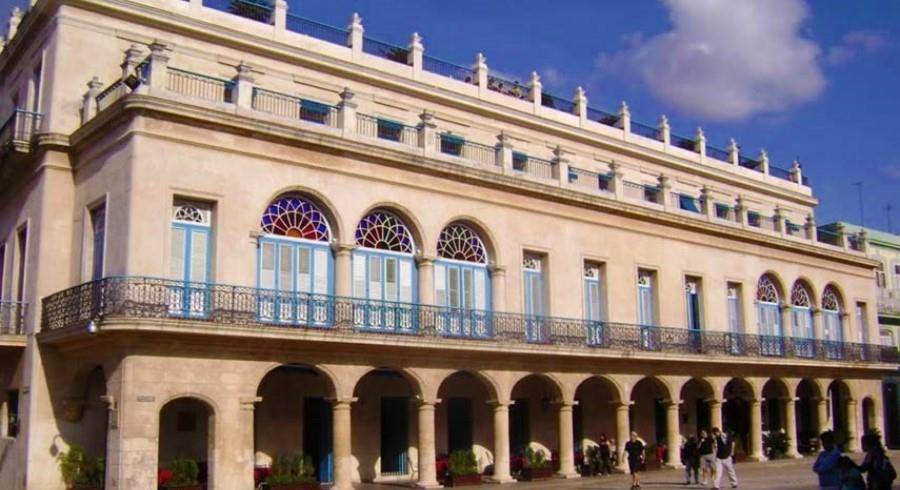
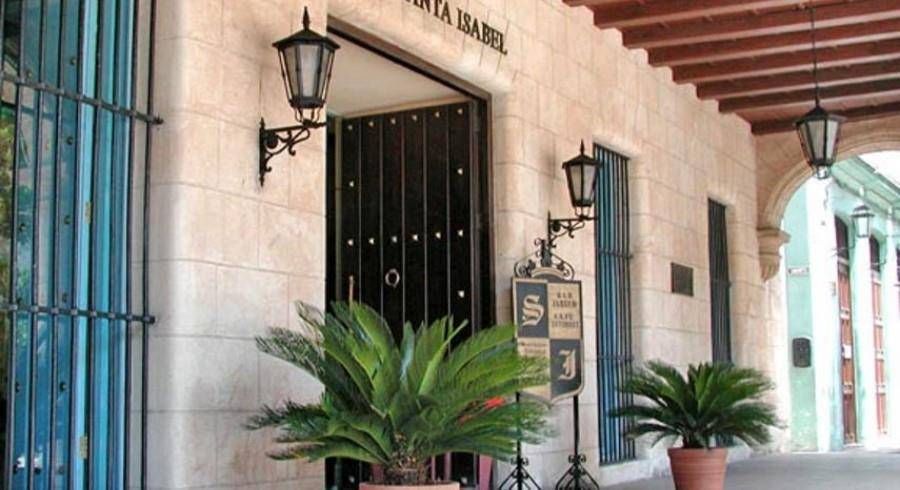
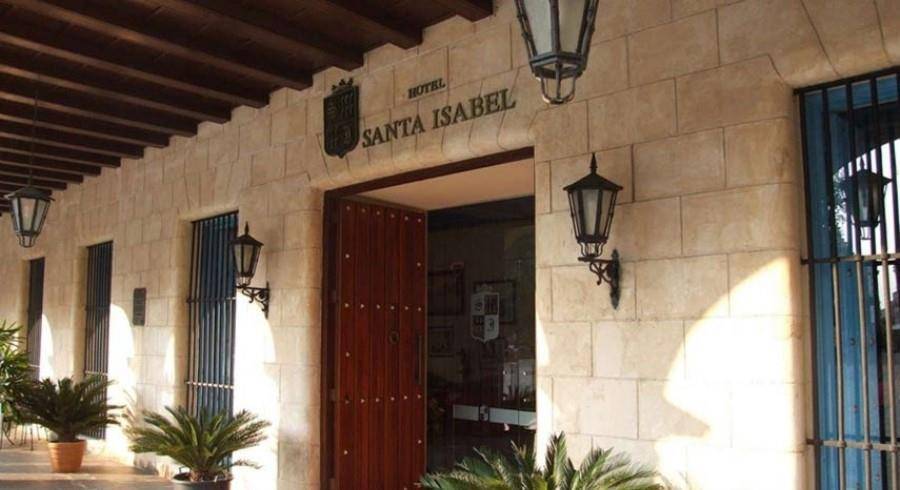
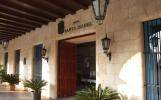
The magnificent Hotel Santa Isabel has an enviable location in the heart of Old Havana, directly facing the charming cobbled square of Plaza de Armas, with its perfect blend of bars, museums & restaurants.

History & elegance go hand in hand at Santa Isabel dating back to the 19th Century, when it was owned by the Count of Santovenia (whose decorative initials can still be found in a variety of fixtures & fittings). The distinguished visitors of its colonial past continue to this day, with guests such as Jack Nicholson, Sting & ex-US president Jimmy Carter.

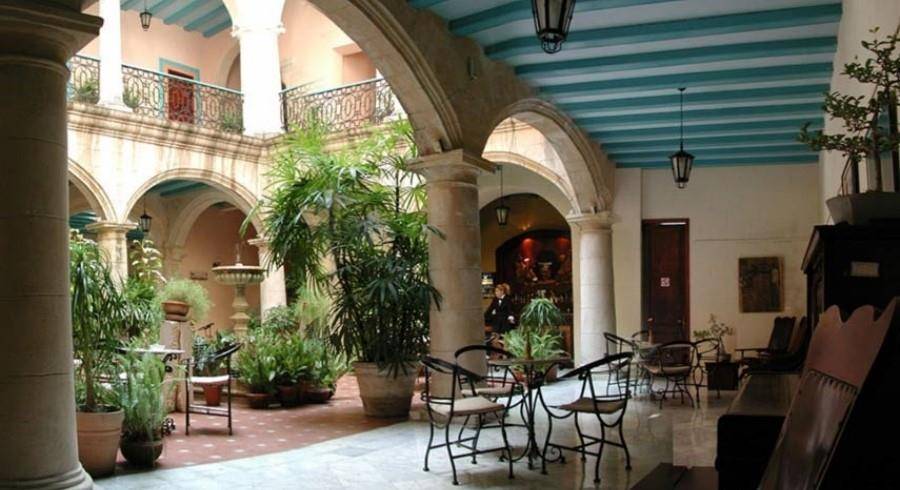
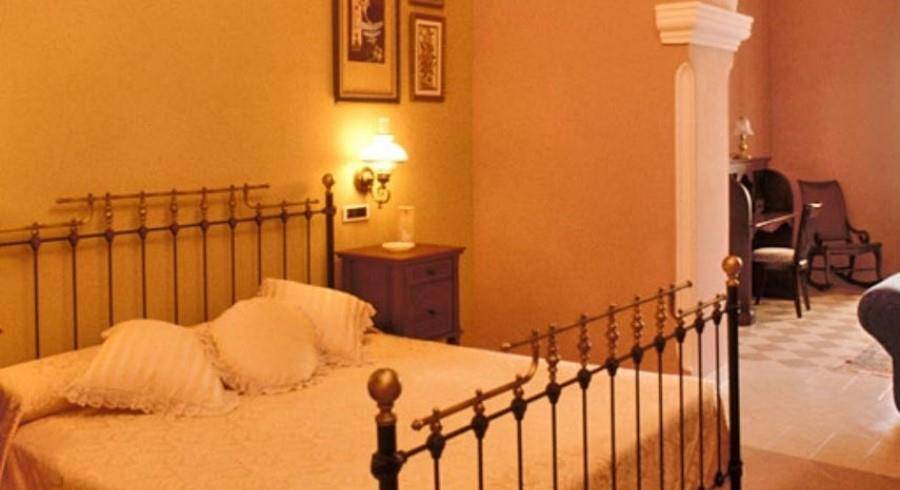
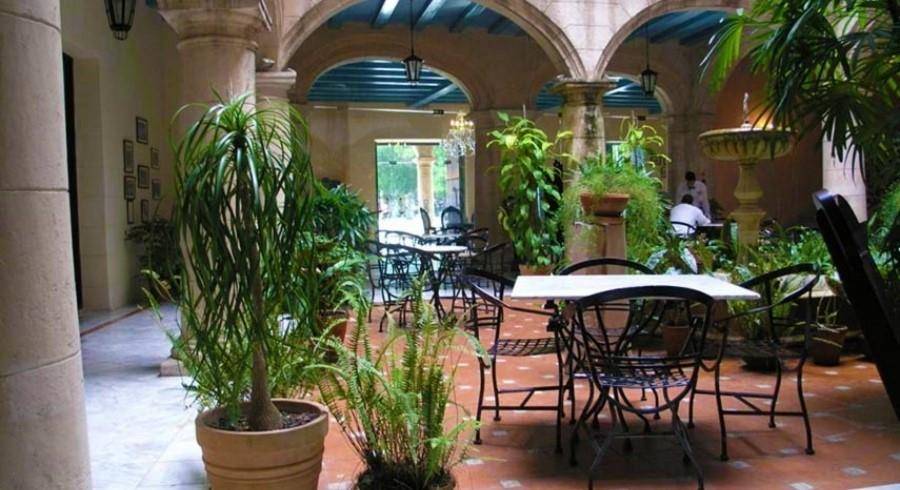
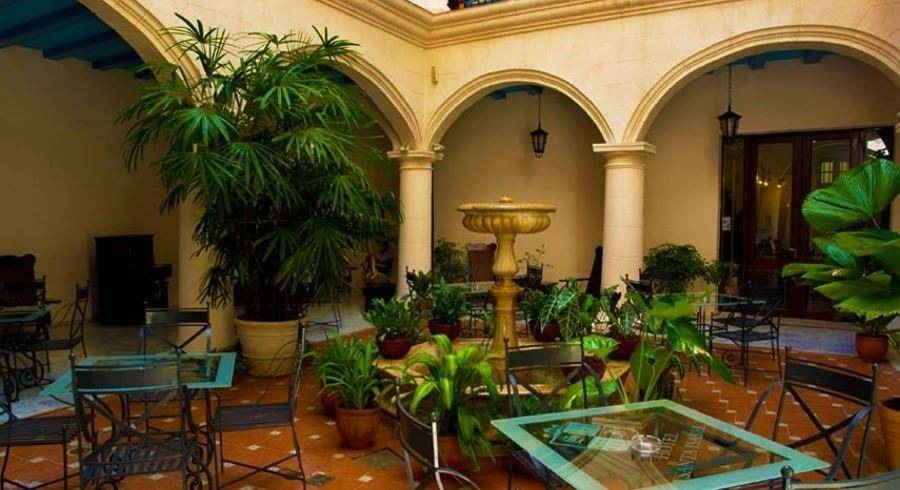
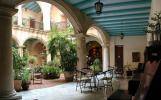
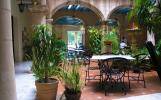
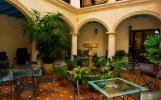
The grand facade is complemented by elegance inside, with a large, air-conditioned lobby boasting crystal chandeliers & beautiful period furnishings. Adjoining this is the inner courtyard where guests can relax in the sun or shade beside the tranquil fountain, while they can also enjoy the sun & spectacular views from the hotel rooftop.

The Condado restaurant has antique furnishings & maintains the elegant, colonial ambience of Santa Isabel Hotel. Breakfast can be taken there but, with views out onto the square where there are frequent markets, many guests enjoy taking breakfast outside under the shady arched gallery.

While Santa Isabel has an unparalleled location on the picturesque Plaza Armas, it is also surprisingly quiet & yet just one minute from the bustling Calle Opisbo, with its bars & music. It is easy to see why Hotel Santa Isabel is a favourite for visitors looking for a stylish stay in Old Havana.


Calle Oficios, esq Muralla, Plaza de San Francisco de Asís, La Habana

Alejandro de Humboldt Museum

The Museo Alejandro de Humboldt (Alejandro de Humboldt Museum) is located in a Colonial house in Plaza de San Francisco de Asís Square, in Old Havana, Cuba. Its name comes from the German scientist Alejandro von Humboldt, who is seen as the second person to discover Cuba. This is a scientific museum dedicated to biology and its main objective is to preserve research and promote the historical Humboldt’s legacy. This institution enhances the labor of Cuban and international personalities whose contributions are considered relevant for the development of culture in general terms. It exhibits the historical trajectory of the scientific and botanic data he compiled throughout the island at the beginning of the 19th century, as well as a botanic exhibition which is fundamentally made up of ferns. In this museum there is a perfect copy of a Kritosaurus skeleton found in the desert and donated by the Mexican government, as well as an enormous Pterosaur skeleton, which is around 10 meters length. The House also has a conference room with capacity for 100 persons and a specialized library on German literature.

Ave Carlos Manuel Céspedes y Santa Clara, Habana Vieja, La Habana

Nuestra Señora de Kazán Orthodox Cathedral

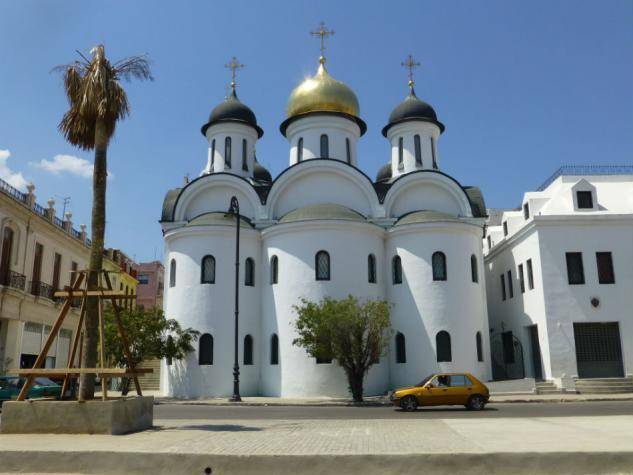
The Catedral Ortodoxa de Nuestra Señora de Kazán (Nuestra Señora de Kazán Orthodox Cathedral), declared World Heritage Site by UNESCO, is one of the newest constructions in Havana, being built in 2000. This Russian Orthodox church is Byzantine in style. It has six beautiful domes, two of which (the biggest and smallest) are gold-sheeted, and the rest are made of bronze. Its staircase entrance calls our attention and is considered the second largest staircase of all outside Russia. From the interior, its golden altar stands out, built in Trinidad and the San Sergio Monastery, Russia; and the murals adorning its walls.

Carretera de La Cabana, Habana del Este

San Carlos de La Cabaña Fortress

The vast Fortaleza de San Carlos de la Cabaña, known as ‘La Cabaña’, running beside the harbor, was constructed after the English capture of Havana in 1763. The largest of the military structures built by Spain in the Americas, this fortress was completed in 1774 and its presence formed an effective complete deterrent against the country's enemies. The polygon, occupying an area of around 10 hectares, consists of bastions, ravelins, moats, covered walkways, barracks, squares and stores.  It is impressively well preserved, and the gardens and ramparts are romantically lit in the evening. This fortress hosts the spectacular nightly ceremony of El Cañonazo de las Nueve (cannon fire at 9), the firing of a cannon that marked the closing of the city gates, one of Havana's longest-held and most attractive traditions.

Oficios, e/ Amargura y Churruca, Habana Vieja

San Francisco de Asís Square

This square dates back to the first half of the 17th century. Its location, just a few metres from the bay, led to it becoming an important trading square over the years. It is said that around the year 1600 the first fountain of the city could be seen at this square. In 1836 it was replaced by a beautiful fountain made of white Carrara marble by Giuseppe Gaggini, under the good auspices of the Villanueva Count. This fountain is called Fuente de los Leones (Lions Fountain). On its paved area stand two noteworthy buildings: the Monastery and Basilica of San Francisco de Asís, which today houses the Museum of Religious Art and a concert hall. It is also where the Lonja del Comercio (Chamber of Commerce) is located, inspired by Spanish Renaissance architecture and topped by a dome on which a sculpture of the god Mercury stands. Among the houses built around the plaza, the house of the Arostegui family, residence of the Captain Generals until the completion of the City Hall at the end of the 18th century, was erected.

Be the first to write a review

Write a review

Title

Your review

What sort of Trip was this?

  • Business
  • Couples
  • Family
  • Friends
  • Solo

When did you travel?

Add a tip to help travelers choose a good room (Optional)

Do you have photos to share? (Optional)

Name

Email

Skedio, S.L. CIF: B66173931. # Travel Agency Licence: GC-3667 © 2026 Enjoytravel Corporate, All rights reserved